
Making Public Education Better: Respect the Profession — Elevating the Role of Teachers
- Al Felder

- Nov 2, 2025
- 2 min read
Every great school begins with great teachers. Yet in recent years, the teaching profession has faced an identity crisis. The people who dedicate their lives to shaping the next generation often feel devalued, distrusted, and disrespected.
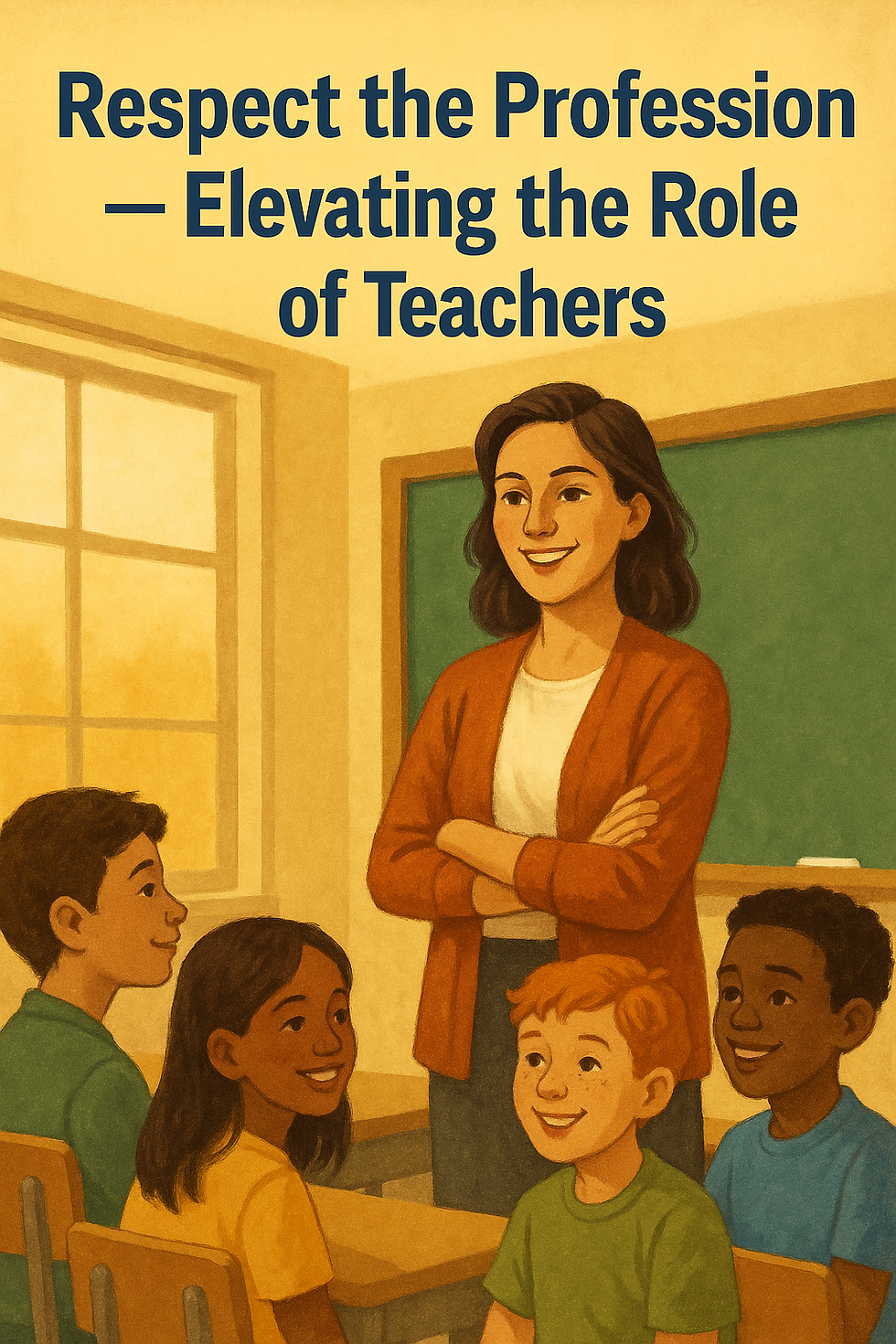
If we genuinely want to improve public education, we must start by restoring respect to those who make it possible.
The Erosion of Respect
Teachers have long carried more than their share of responsibility—educating, mentoring, counseling, and protecting children. But too often, they do it without the support, pay, or trust they deserve.
Across the country, surveys show that educators' morale is at historic lows. Many teachers describe feeling micromanaged, blamed for systemic failures, and unheard in decisions that affect their classrooms.
The message this sends is clear: we trust teachers to shape our children’s minds, but not to shape their own profession.
That must change.
The Cost of Disrespect
When teachers feel undervalued, everyone suffers.
Students lose stability: High turnover means fewer experienced educators in the classroom.
Communities lose continuity: Constant staff changes weaken relationships between families and schools.
Society loses credibility: When teaching is treated as a job of last resort, talented people turn away from the profession altogether.
Respect is not just emotional—it’s structural. It shows up in policy, pay, workload, and voice.
What Respect Looks Like in Practice
Respect is not just about kind words; it’s about empowerment. Teachers deserve the same professional dignity granted to doctors, engineers, and other experts in their fields. That means:
Trust in Professional Judgment: Teachers should be free to adapt lessons to their students, not bound by rigid scripts.
Fair Compensation: Salaries should reflect the education, expertise, and responsibility required.
Time for Planning and Growth: Protect teacher planning periods and provide meaningful professional development.
Seat at the Table: Include teachers in policy creation, curriculum design, and school improvement planning.
When teachers are respected, they rise to the challenge. When they’re not, burnout follows.
How This Connects
Empowerment Over Micromanagement: Trust educators to make classroom decisions based on professional knowledge.
Investment in People: Pay, benefits, and working conditions should match the demands of the profession.
Professional Voice: Teachers must help shape the future of education, not merely implement it.
Public Respect and Advocacy: Celebrate educators publicly—because gratitude alone doesn’t sustain a career, but respect and support do.
What Should Be Done
Raise Pay to Professional Standards
Make teaching a financially sustainable and competitive career.
Reduce Bureaucratic Burden
Streamline paperwork and allow teachers to focus on teaching.
Establish Teacher Advisory Councils
Involve educators in state and local decision-making.
Promote Teacher Leadership Opportunities
Create pathways for advancement that keep great teachers in the classroom.
Rebuild Public Trust Through Communication
Highlight teacher successes and create open dialogue between schools and communities.
Closing: The Heart of Education
At its core, education is a human endeavor—built on relationships, compassion, and the transfer of wisdom from one generation to the next. Teachers are not interchangeable parts; they are the heartbeat of every classroom.
To improve public education, we must stop asking teachers to do more with less—and start giving them the respect, resources, and recognition they’ve always earned.
When we elevate teachers, we elevate everyone.


Comments