
Choice Without Comparable Rules
- Al Felder

- 20 minutes ago
- 4 min read
Why “Competition” Doesn’t Work When Only One System Carries the Mandates

One of the most common arguments for school choice is simple: competition will improve education.
In theory, that sounds reasonable. Competition can push organizations to improve, innovate, and respond to customer needs.
But here’s the problem: competition only works when the competitors play by comparable rules.
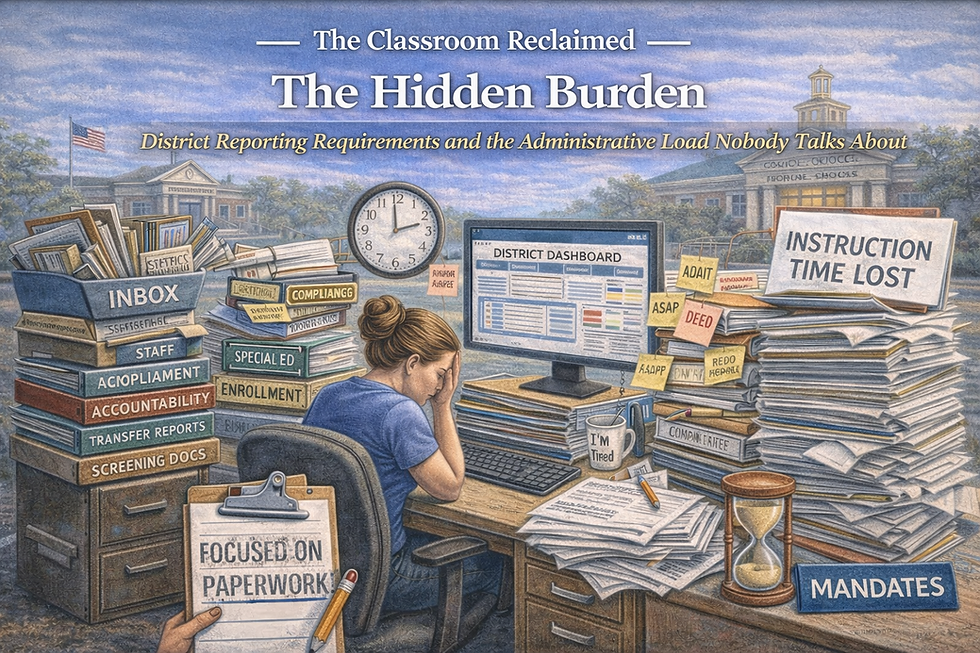
Right now, Mississippi’s public schools are still required to operate under a thick web of federal and state mandates—testing requirements, accountability ratings, staffing rules, reporting requirements, intervention plans, special education compliance, transportation obligations, and open-access enrollment responsibilities.
HB0002IN expands choice options while leaving public schools under the full weight of those mandates—and in some areas, it adds even more.
That isn’t competition. That is a tilted field.
Let’s talk honestly about what that means for public education.
The central issue: Public schools serve everyone—and carry everything
Public schools are not allowed to choose their customers.
Public schools must serve:
students with severe disabilities
students with significant behavior needs
students in poverty
students who are homeless
students who are new English learners
students in foster care
students who move repeatedly mid-year
students who are already behind
students who need transportation
students who need meals
students who need counseling and mental health support
And they must do all of that in full compliance with requirements—often without adequate funding or staffing.
That is the role public education has always played: the system that serves every child.
School choice programs can offer important alternatives, but they often do not carry the same scope of obligations. And that is where “competition” becomes unequal.
What HB0002IN changes—and what it leaves in place
1) Choice options gain flexibility
HB0002IN creates pathways where participating nonpublic options are not held to the same accountability structure as public schools. That includes differences in:
state testing requirements
public accountability ratings
staffing/licensure expectations
reporting requirements
2) Public schools remain bound to mandates—plus new layers
Public schools remain accountable through:
school grades and state accountability ratings
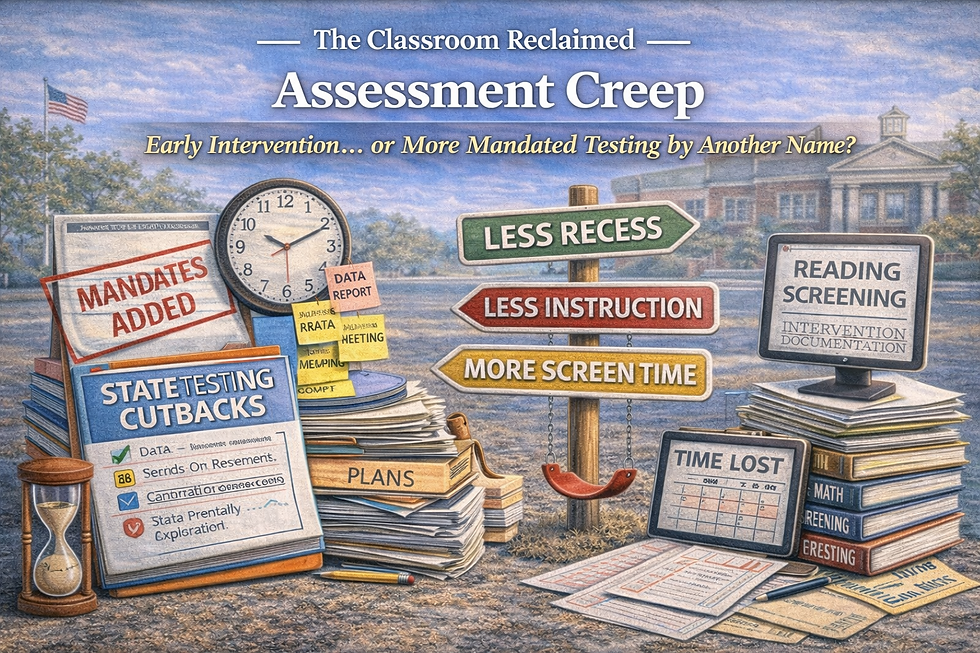
mandated screeners and intervention plans
required compliance systems and reporting
staffing and licensure rules
discipline constraints and federal mandates
transportation and open-enrollment obligations
Under HB0002IN, public schools face additional requirements through expanded screening and intervention systems in reading and math.
So the picture becomes clear:
one system gains flexibility
the other remains tightly regulated
and then both are told to “compete”
That isn’t a fair marketplace. It’s a structural imbalance.
Why unequal rules create predictable outcomes
When one system is regulated more heavily than the other, the outcomes tend to follow a familiar pattern.
1) Public schools absorb the heaviest needs
As choice expands, public schools often become more concentrated with:
higher-need student populations
higher behavior and trauma needs
higher special education demands
greater mobility
greater poverty concentration
This is not because public schools fail. It’s because public schools remain the default provider with open access.
2) Public schools become “the compliance system”
Public schools increasingly become the place where:
compliance is enforced
paperwork grows
intervention plans multiply
data reporting expands
staffing is harder
and morale declines
Meanwhile, other options operate with fewer constraints. That difference changes teacher retention and recruitment.
3) Public schools are judged by metrics that don’t apply equally
When public schools are rated, labeled, and publicly scored, those labels shape perception.
If other options are not scored the same way—or if they use different measures—the public comparison becomes apples-to-oranges.
But perception doesn’t care about nuance. Perception becomes “truth” in political environments.
4) The “competition” becomes selection—not improvement
Competition only works if systems compete to improve service.
But when rules are uneven, “competition” often becomes:
student sorting
teacher sorting
resource sorting
reputational sorting
And public schools end up serving the most challenging reality with the most restrictions.
A simple analogy: one runner has weights strapped on
Imagine two runners on the same track.
Runner A:
must carry a heavy backpack
must wear ankle weights
must stop repeatedly for paperwork checks
must follow strict rules at every checkpoint
Runner B:
runs freely
chooses their path
stops when they want
carries less weight
Then the crowd shouts, “Competition will make Runner A better!”
That’s not competition. That’s a staged race.
Public education has become Runner A.
What “fair competition” would actually require
If lawmakers truly want competition, they must decide whether they are willing to create comparable expectations.
Fair competition would include:
comparable accountability reporting for all publicly funded options
comparable transparency and oversight
comparable student protections
comparable service expectations
and clear guardrails that prevent public schools from becoming the system of last resort
If that doesn’t happen, choice becomes less about improving education and more about creating pathways out of the most regulated system.
The long-term risk
If public schools become:
the most mandated
the most publicly blamed
the most compliance-heavy
and the most burdened with high-need realities
Then fewer teachers will want to stay. Fewer administrators will want to lead. Morale will decline further. And the “public system” will increasingly be treated as something to escape rather than something to strengthen.
That is not reform. That is erosion.
A balanced takeaway
I’m not against families having options. I’m not against competition in principle.
I am against calling something “competition” when only one system carries the mandates.
If Mississippi wants to improve education, we should reduce unnecessary burdens across the board—especially in elementary grades. We should support teachers and strengthen learning environments.
But if lawmakers keep stacking requirements on public schools while loosening them for other options, they are not creating a fair system.
They are building a lopsided one.
Reflection question for readers
If the choice is accountability, why do public schools still have to prove themselves through an ever-expanding list of mandates, while other options are allowed to operate under looser standards?

Comments